How Does Invisalign Treatment Work?

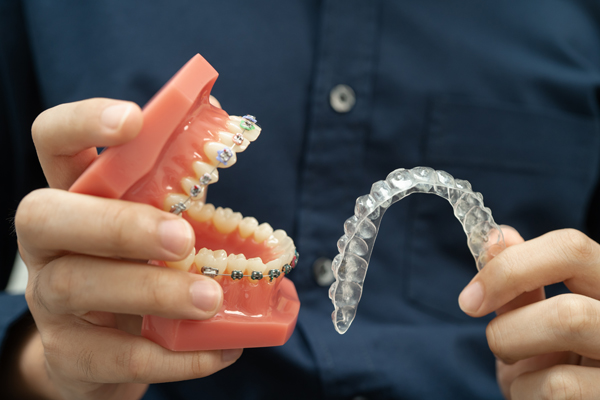
People who want to straighten their teeth without dealing with metal braces can opt for Invisalign. Invisalign is a set of removable aligner trays that are custom made for the patient’s teeth. So how does it work to move the teeth? Continue reading to find out.
How Invisalign® works
Invisalign aligners are nearly invisible, removable and custom-made for the patient’s teeth. They consist of a series of trays that move the teeth progressively into their proper position. Every tray is produced in a way that the teeth are somewhat straighter than the last trays. The teeth will move to conform to the tray – usually 0.25mm per tray. Every two weeks, the patient will swap out the tray for new ones until treatment is complete.
To use, the patient needs to wear the tray over their teeth. The trays are barely noticeable and are the perfect choice for those who want to straighten their teeth discreetly. To achieve the desired results, the aligners must remain on the teeth throughout the day and be taken out only when eating or for oral care.
What to expect during treatment
To get started, patients must meet with their general dentist to know if Invisalign will work for their condition. They will also be able to ask questions about the procedure, including what to expect and how to maintain oral hygiene throughout treatment.
After the consultation, the dentist will take a digital scan of the teeth and use computer software to generate 3D images and map out teeth movement throughout the treatment period. The images will be needed to produce the custom aligners. The trays do not cause irritation and are comfortable to wear.
The aligners correct teeth misalignment by using a patented thermoplastic design. Invisalign induces precise force to straighten teeth and controls when the force is applied. Only a few teeth move at every stage of treatment; the dentist decides this when planning treatment.
Treatment timeline
The average treatment time for most adults is 12 months. The time varies depending on the severity of the patient’s condition. The treatment time varies in teenagers. The dentist will work with the patient to create a personalized treatment plan that suits their needs.
In some cases, the dentist may provide attachments to improve the smile further. This may mean placing tooth-colored composite on the teeth to give the aligner a firmer grip on the teeth, which will ensure better tooth movement.
After Invisalign treatment
After the teeth are in their correct alignment, the dentist will suggest retainers. Retainers are important to prevent the teeth from shifting to their previous position. Patients must commit to wearing the retainer after treatment or the procedure will have been in vain. The retainers are custom-made from impressions of the patient’s teeth and will keep the teeth in their correct position. These could be fixed or removable.
Final note
If the dentist believes Invisalign will be effective in giving you a great smile, the success of the process will largely depend on your ability to comply with the dentist’s instructions.
Request an appointment here: https://www.ohiocosmeticdentists.com or call Ohio Cosmetic Dentists at (614) 503-5240 for an appointment in our Columbus office.
Check out what others are saying about our services on Yelp: Read our Yelp reviews.
Recent Posts
Teeth brushing is one of the most important oral hygiene basics, as it removes plaque from teeth. However, the toothbrush you use can impact how effective this practice is.To optimize toothbrushing, you need to find a brush that fits your needs. Fortunately, there are many options out there.When you first learned oral hygiene basics, you…
Choosing to straighten teeth with clear aligners is a big decision, and knowing when to schedule a consultation with an Invisalign® dentist is essential. Invisalign offers a discreet and comfortable alternative to traditional braces, making it a popular choice for patients seeking orthodontic treatment. Understanding the right time to meet with a provider ensures the best…
Going to the general dentistry office may not excite you, but you can reap the benefits. Putting off dental appointments can disrupt good oral health habits and lead to serious problems. The next time you come to see your dentist, you will have a dental cleaning. This is much more than a formality. General dentistry…
Although many people believe that plaque and tartar are the same, they actually have significant differences. Understanding the distinctions between these two dental conditions can help you identify their warning signs and practice oral hygiene basics to avoid them.Plaque is a soft film containing millions of bacteria that build up on your teeth, gums, and…