What Makes Invisalign Teeth Straightening Unique?
You may have heard of Invisalign® but perhaps you do not quite understand what makes it stand out from traditional braces. Each straightening tool uses different methods to move teeth into more aesthetically pleasing positions.
How traditional braces work
The goal of traditional braces is to correct crooked teeth and jaw or bite issues. Many dental patients seek this corrective option during their adolescence, though it is becoming more popular among adults than previously. Braces are worn most often for one to three years, depending on the level of dental correction necessary.
What are they made of?
Classic braces consist of brackets that are adhered to teeth using a dental adhesive, wires to connect the brackets, and metal rings that surround molars. Elastic bands are placed around the brackets to apply force to the jaw. Spacers consist of metal rings or rubber bands and are used between molars. They move the jaw forward by creating room in the rear of the mouth. Separate bands are also used to correct under- and overbites, attaching them from the upper to the lower jaw.
Coil springs are used for patients who need additional space between two teeth. This is often necessary for youths who need room for an adult tooth to come in or adults who need a dental implant. Not every patient needs all of the components of traditional braces, and the amount of work your mouth requires will depend upon your unique mouth and dental needs.
What happens once the braces are on?
Once your dentist has placed your braces, the work is not over. You will need to spend additional time caring for your teeth to keep them healthy. Additionally, you will need to avoid certain foods such as popcorn and caramel. Braces can cause sores in the mouth due to friction created by the brackets, so dental wax may be helpful to patients experiencing discomfort.
Further, you will need to visit the office every four to eight weeks to have your braces adjusted. This process includes tightening the wires or replacing them if they are broken or worn. The oral health care professional will also check the progress of the braces to see how much your teeth have shifted.
These appointments last around 20 to 40 minutes, depending on the adjustments necessary. When your dentist is satisfied with your teeth and bite, the braces will be removed and you will need to wear a retainer at all times for several months to keep your pearly whites in place.
How Invisalign® works
Like traditional braces, the goal of Invisalign® is also to straighten teeth. This option is less visible but is also less effective at shifting your bite than classic metal braces. Patients with significant bite issues may require the use of regular braces rather than Invisalign®. Your dentist can tell you which option could suit your specific dental needs. Most people wear Invisalign® for at least six months to a year.
What are they made of?
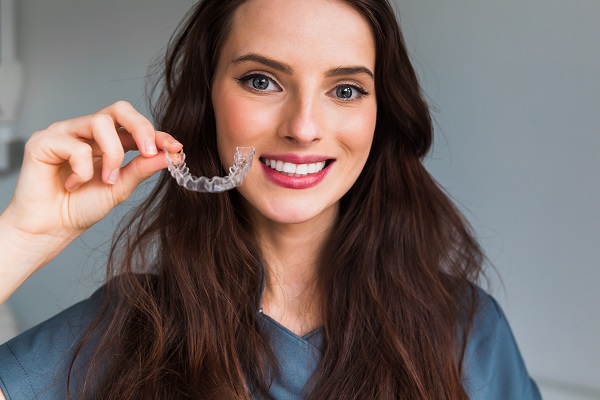
Unlike classic braces that consist of numerous components, Invisalign® consists of clear aligners made of plastic. They are created by taking images and impressions of your mouth. Each aligner brings you one step closer to the straight smile you desire.
What happens once you begin wearing them?
Once you have had your first set of Invisalign® aligners created and begin wearing them, you will need to keep them in your mouth for around 20-22 hours daily. You can remove them to care for your teeth as you normally would but should wear them even while you sleep. Certain foods should be avoided with Invisalign®, such as caramel, gum, and other sticky foods that could damage your aligners.
The frequency of your dental appointments will depend upon your mouth, but most patients see the dentist every one to two weeks for a new set of aligners. Once your teeth have shifted to the preferred position, you will need to wear a retainer at all times for several months to keep them in place.
Conclusion
Invisalign® straighteners are less noticeable than traditional braces because they are made of clear plastic. Additionally, they normally require less time (typically six months to one year) to re-align teeth. Another benefit is that they can be removed to allow you to floss and brush your teeth as normal, rather than needing to clean around the wires of classic braces. Invisalign® is also less likely to cause sores in the patient's mouth because the plastic is smooth.
Request an appointment here: https://www.ohiocosmeticdentists.com or call Ohio Cosmetic Dentists at (614) 503-5240 for an appointment in our Columbus office.
Check out what others are saying about our dental services on Yelp: Invisalign in Columbus, OH.
Recent Posts
Invisalign® and clear braces give adults a discreet, flexible way to straighten their teeth. It is common to want a treatment that looks subtle, feels comfortable, and fits around work, family life, and social plans. Neither option is necessarily better than the other; it all depends on the patient. A general dentist can compare Invisalign…
Invisalign® is probably the most well-known brand name for clear aligners. Their popularity is due to their ability to straighten teeth flexibly and discreetly and to their SmartTrack™ material, which can move teeth comfortably and accurately. Patients interested in Invisalign need to consider the benefits and if they are candidates.Invisalign is a highly recognizable brand…
Invisalign® is a modern teeth-straightening treatment that changes dental alignment by moving teeth with clear aligners. The process of getting this system is like that of getting traditional braces. Each step makes sure that you achieve a straighter, healthier smile. Here are the different parts of your Invisalign journey.This is the first step of getting…
Invisalign® is a teeth straightening treatment that uses a series of clear aligner trays. While Invisalign can complete the straightening process faster than other options, proper maintenance of these trays is essential to an effective, comfortable treatment. The good news is that proper maintenance is easy for patients to complete regularly.While the dental provider will…