If you are considering implant dentistry or are about to go through the process and want to learn more about it, it is helpful to first understand the basics. Here, we will discuss the various parts that make up an implant dentistry restoration and highlight how they all work together to complete the restoration.
Implant dentistry: What parts are used for the restoration?
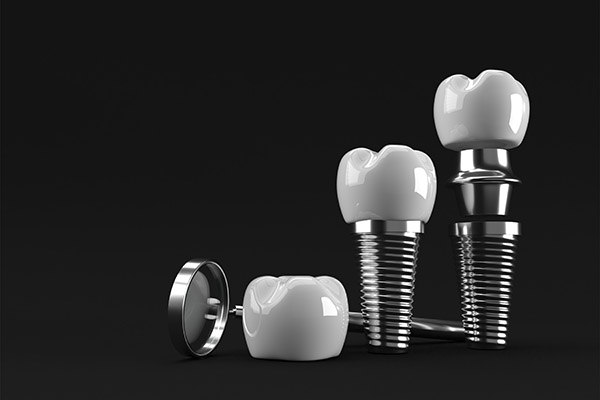
An implant dentistry restoration consists of a dental implant, dental abutment, and a restoration (crown, bridge, or denture). All three of these components are essential to complete the restoration. The following is everything to know about each part that is used in the procedure, their role, and when they are placed throughout the process.
The dental implant
The dental implant is what separates implant dentistry restorations from alternative (and more traditional) solutions. The implant is a screw-like metal post that is fixed into the jawbone, serving as the support and root for the replacement tooth. Implants go through a process known as osseointegration with the jaw, which involves the bone and the implant fusing together. It is placed during a scheduled surgery and is one of the first steps of the implant dentistry restoration process.
The dental abutment
A dental abutment is a connector piece for the implant and dental restoration. It is also a screw-like piece that attaches to the dental implant. Abutments can be made of different materials, but they are most commonly made of titanium (the same as an implant). The abutment is an important piece to ensure strong support for the replacement tooth (or teeth). An abutment is attached to each dental implant, so multiple abutment attachments are required for a bridge or denture. Abutments are placed after the mouth heals from dental implant placement surgery.
The crown, bridge, or denture
The last part that is used in the implant dentistry procedure is the dental restoration. A restoration would be a crown, bridge, or denture, depending on the number of teeth that are being replaced. For single tooth replacement, a crown is used, whereas a bridge (partial denture) or complete denture is used for replacing multiple missing teeth. These restorations are typically made of ceramic and have an identical appearance to natural teeth.
When a bone graft procedure is necessary
A bone graft procedure is sometimes required before the placement of dental implants particularly if the patient has experienced bone loss due to bone atrophy following tooth loss or as a result of periodontal disease. This helps build the jawbone to ensure an adequate level of support for dental implants.
Get started with implant dentistry by scheduling a consultation
If you are not entirely happy with your smile due to a missing tooth (or multiple missing teeth), then you may benefit by visiting an implant dentist and learning more about your tooth replacement treatment options with implant dentistry. Do not hesitate to contact us by giving us a call today if you have questions or are ready to schedule a visit.
Request an appointment or call Ohio Cosmetic Dentists at 614-503-5240 for an appointment in our Columbus office.
Recent Posts
Consistent oral hygiene is essential for promoting strong oral health. While responsibly caring for your mouth deserves attention throughout the day, oral hygiene basics before sleep is essential in keeping your teeth and gums healthy over time.Regularly practicing strong oral hygiene habits before bed can make a world of difference in the health of your…
Flossing is an oral hygiene basic that everyone should know. Dentists recommend flossing at least once a day to keep the teeth healthy.However, if it has been a while since you learned how to floss, you may need a refresher course. Here is a breakdown of recommended flossing techniques to help you maintain your beautiful…
Healthy teeth are a vital part of being able to eat and enjoy food, but certain foods can be more harmful to dental health than others. Learning about foods that help and hurt the teeth is an important part of oral hygiene basics that can be helpful in guiding the choices people make when caring…