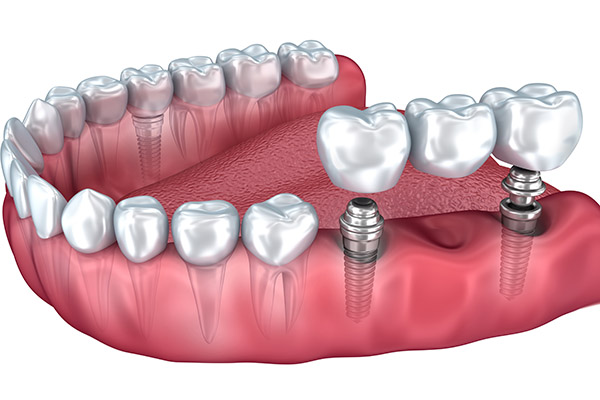
Dental bridges can be supported by adjacent natural teeth (traditional fixed bridges) or by dental implants (implant dentistry bridges) on each side of the restoration. It is helpful to understand the differences with each option before making a final decision as to which of the two popular teeth replacement solutions is right for you.
Implant dentistry bridges vs. traditional dental bridges
Implant dentistry bridges are supported by dental implants, whereas traditional dental bridges are supported by natural teeth. Both options offer benefits and potential drawbacks depending on your treatment goals. The following is a closer look at each teeth replacement solution.
What is a traditional dental bridge?
A traditional dental bridge is not supported by dental implants. Instead, it is typically supported by adjacent teeth. There are different types of traditional dental bridges. The most common types are fixed dental bridges, Maryland bonded bridges, and cantilever bridges. One may be recommended over another depending on the location of the missing teeth and the health of adjacent teeth.
The pros and cons of a traditional dental bridge
The treatment process for a traditional dental bridge is simpler. It does not require a surgical procedure and the treatment time is subsequently much faster. The cost of a traditional dental bridge not supported by dental implants is more affordable initially as well. However, they do not preserve jawbone density or offer the same level of long-term durability as implant-supported dental bridges.
What is an implant dentistry bridge?
An implant dentistry bridge, also called an implant-supported bridge, can replace a section of missing teeth by attaching a dental bridge to two dental implants, one on each side of the missing section of teeth. This option is considered by many dentists to offer more benefits than a traditional dental bridge.
The pros and cons of an implant dentistry bridge
Perhaps the most unique benefit of an implant dentistry bridge is the ability to preserve the density in the jawbone and prevent the loss of bone. An implant dentistry bridge also is stronger and more durable, lasting much longer on average than a traditional dental bridge. The two most notable drawbacks to an implant dentistry bridge are a longer (and more invasive) treatment process and a higher initial cost, although the cost for long-term maintenance for the restoration is generally less with an implant dentistry bridge.
Which option is right for me?
A dentist can help you determine the most appropriate dental bridge solution for you during a consultation. In general, an implant dentistry bridge is preferable for a patient who needs to replace multiple missing teeth and wants the longest lasting and most natural-like restoration possible.
Our dental office offers implant dentistry bridges
If you have one or more missing teeth and want to learn about your teeth replacement options with implant dentistry bridges or traditional fixed bridges, then contact us today to schedule a consultation visit. We can help you restore the appearance, function, and health of your smile after tooth loss occurs.
Request an appointment or call Ohio Cosmetic Dentists at 614-503-5240 for an appointment in our Columbus office.
Recent Posts
Consistent oral hygiene is essential for promoting strong oral health. While responsibly caring for your mouth deserves attention throughout the day, oral hygiene basics before sleep is essential in keeping your teeth and gums healthy over time.Regularly practicing strong oral hygiene habits before bed can make a world of difference in the health of your…
Flossing is an oral hygiene basic that everyone should know. Dentists recommend flossing at least once a day to keep the teeth healthy.However, if it has been a while since you learned how to floss, you may need a refresher course. Here is a breakdown of recommended flossing techniques to help you maintain your beautiful…
Healthy teeth are a vital part of being able to eat and enjoy food, but certain foods can be more harmful to dental health than others. Learning about foods that help and hurt the teeth is an important part of oral hygiene basics that can be helpful in guiding the choices people make when caring…