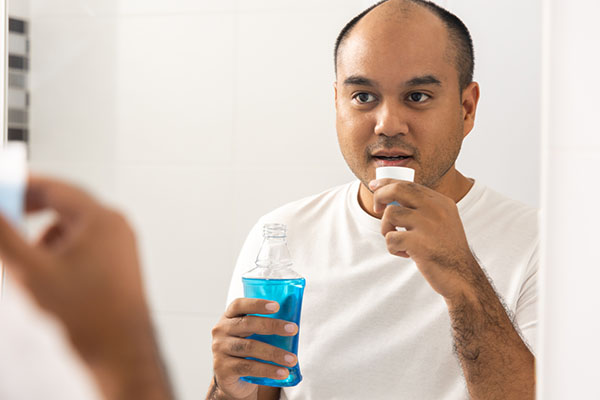
Brushing and flossing your teeth daily are oral hygiene basics, but what about using mouthwash? Is it an essential part of keeping your teeth healthy.
Except for fluoride rinses, mouthwashes are generally not part of the daily oral care routine recommended by dentists, but that does not mean it has no value. Using mouthwash correctly can offer several benefits.
Fights bacteria
One of the most important oral hygiene basics is removing bacteria that cause gum disease and cavities. Most mouthwash is antimicrobial, which means it kills bacteria. To use mouthwash, you take a small amount and swish it around your mouth vigorously for at least 30 seconds. Then, you spit it into the sink and rinse out your mouth with water. Make sure you do not swallow mouthwash, as it is not meant to be ingested.
Helps with bad breath
Bacteria is often the source of the odor, so anything that kills bacteria may help with bad breath. If you have good oral hygiene but still have bad breath from time to time, mouthwash can help.
Additionally, many brands have "fresh" scents such as peppermint and spearmint to give your breath a boost after a strongly flavored lunch. However, you should look out for mouthwash that only covers up odors, but does not address the underlying issues. Make sure you check the ingredients before purchasing.
Flushes away loose food and bacteria
Dentists recommend flossing to loosen food trapped between teeth, then brushing to catch the debris. However, brushing may miss tiny bits of food that catch on gums. Doing a thorough rinse with mouthwash ensures you get any remaining food particles and bacteria.
Strengthens teeth
Some mouthwash contains fluoride, which is a chemical compound that strengthens enamel. In fact, it is often added to drinking water to prevent cavities. If you are genetically predisposed to developing cavities, rinsing with fluoride-infused mouthwash may be an excellent preventative measure.
Can irritate your mouth
The one downside to using mouthwash is that some brands contain ingredients that can irritate the sensitive skin in your mouth. Even mouthwash that does not contain alcohol can cause discomfort in certain situations.
Canker sores
Canker sores are small lesions that appear in the mouth. They are common and usually go away on their own. However, certain mouthwashes may contain ingredients that can irritate them. If you have a canker sore, you may want to skip the rinse until it is healed.
Dehydration
Some mouthwash ingredients are dehydrating, so your mouth may feel dry after rinsing. This dryness does not bother some people, but if you are prone to dry mouth or are on medication that lists dry mouth as one of its side effects, the dehydration may be more noticeable.
Conclusion
Overall, mouthwash can be a great addition to oral hygiene basics. However, it is essential to remember that rinsing does not replace regular oral care as recommended by dentists. Instead, it is an additional step that you can take to support the pillars of brushing and flossing.
Request an appointment or call Ohio Cosmetic Dentists at 614-503-5240 for an appointment in our Columbus office.
Recent Posts
Everyone learns oral hygiene basics when they are young, but some details get lost over time. For example, many adults are confused about what type of toothbrush to use. This simple tool comes in many different forms, including a variety of sizes and a range of bristle textures. You may wonder why there are so…
Brushing and flossing are essential oral hygiene basics that help prevent tooth decay and gum disease. While many people pay careful attention to their teeth and gums, the tongue is often neglected. However, this large surface of the mouth should also be cleaned on a daily basis. Doing so can help many people enjoy better…
Teeth brushing is one of the most important oral hygiene basics, as it removes plaque from teeth. However, the toothbrush you use can impact how effective this practice is.To optimize toothbrushing, you need to find a brush that fits your needs. Fortunately, there are many options out there.When you first learned oral hygiene basics, you…